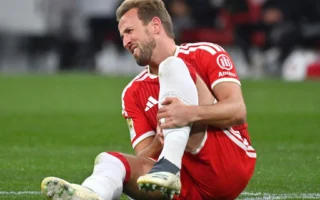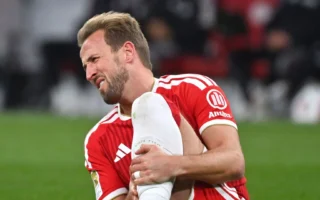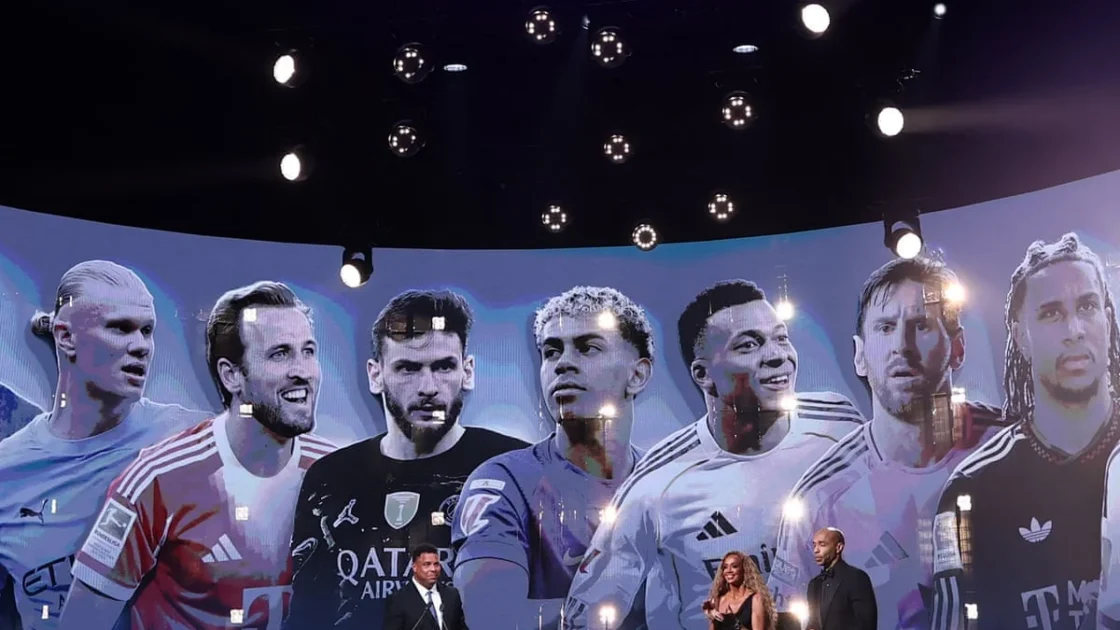
Harry Kane secured the top honor at this year’s Ballon d’Or ceremony in London, highlighting a three-hour event that offered several key insights into the modern game as reported by Football | The Guardian.
Team Success Still Dictates Individual Honors
As Football | The Guardian noted, voters placed heavy emphasis on team performance alongside individual achievements. Harry Kane cemented a strong case by scoring 64 goals in 56 club matches while also winning the top men’s striker award. His status as a prolific stat-accumulator stood out during an era of intricate systems, while peers from top-performing clubs like Arsenal and Paris Saint-Germain saw their rankings limited despite collective success.
Similarly, difficult campaigns at club level impacted other contenders. Manchester City’s inability to surpass Arsenal seemingly affected Rodri and Erling Haaland, while Real Madrid’s chaotic season hindered Jude Bellingham’s chances. Ultimately, the battle came down to individual brilliance between Kane and Kylian Mbappé, with Kane’s success leading Bayern Munich to the Champions League semi-finals giving him the decisive advantage.
Breaking the Bundesliga Drought
Kane’s victory ended a 30-year drought for the Bundesliga, with the league’s previous winner being Matthias Sammer in 1996. The win challenged long-standing perceptions about the value of goals scored in Germany’s top-five division compared to leagues like La Liga or the Premier League. Bayern Munich supported the moment by having multiple shortlisted players in attendance and actively promoting Kane’s candidacy.
Since 1996, La Liga has dominated Ballon d’Or winners with 17 selections, followed by Serie A with five, the Premier League with three, and Ligue 1 with two. Vincent Kompany’s Bayern squad helped shift those perceptions by demonstrating competitive strength on the European stage.
The Changing Role of the World Cup
Kane’s win continued a modern trend where the award does not automatically go to a player from the reigning World Cup-winning nation. Fabio Cannavaro in 2006 was the last player before Lionel Messi in 2023 to win the prize in the same year as a global title. Voters increasingly view the tournament as a factor rather than a complete overshadowing of the previous 11 months of club and international football.
Spain’s World Cup victory brought recognition for coach Luis de la Fuente and goalkeeper Unai Simón, but Lamine Yamal and Rodri finished just behind the main frontrunners. Meanwhile, Lionel Messi secured a fifth-place finish following Argentina’s run to the final, maintaining a strong standing despite playing in Major League Soccer.
Source: Football | The Guardian