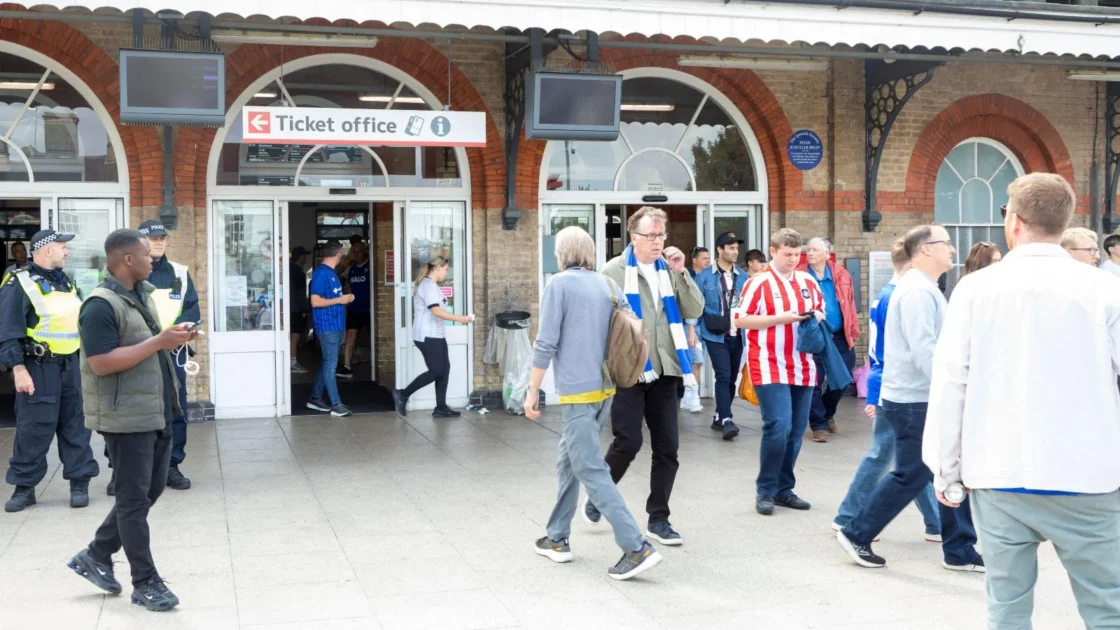
Travelling by train to an away football match offers supporters a chance to socialise, enjoy the journey, and experience the build-up with fellow fans. While the match itself may disappoint, this traditional away-day experience is worth preserving and making more accessible with cooperation from football authorities and the transport industry.
The Demand for Rail Travel
Opting for the train instead of driving can significantly cut the environmental impact of supporting a football club. However, fans face heavy obstacles including expensive tickets, unreliable services, poor connections, and kick-off times that ignore the needs of those attending games.
Despite these barriers, interest in sustainable travel remains high. Data published by Trainline’s ‘I came by train’ initiative in September 2025 estimated that UK fans make 34 million return journeys exceeding an hour to matches annually, with more than half driven by car. Crucially, 83% of surveyed travelling supporters stated they would consider taking the train more often, and 77% expressed a desire to make greener choices.
The report highlighted the potential to move up to 10 million annual football trips from road to rail by 2035 if proper incentives and upgrades are put in place. Proposed solutions include discounted match-day rail fares, flexible tickets for rearranged fixtures, and clearer public transport information.
Scheduling and Transport Hurdles
Choosing public transport becomes much harder when return fares cost a fortune or the final train departs before the final whistle. Research published in 2025 by Away End, alongside the Cool Down Sport for Climate Action Network and supported by Pledgeball, highlighted the scale of these issues.
After reviewing all 1,656 fixtures from the 2024/25 English Football League season, researchers found widespread public transport difficulties for away fans. Their models indicated that inadequate services and poor scheduling could force supporters into high accommodation costs or polluting transport alternatives. Addressing this could prevent up to 23,000 tonnes of carbon dioxide equivalent emissions depending on fan response.
Television broadcasting schedules heavily influence the problem. While broadcasters hold commercial interests, those interests should not consistently override the needs of matchgoing supporters. A survey conducted by the Tottenham Hotspur Supporters’ Trust in 2026 showed that 95% of UK-based respondents believe fixture changes for television need to give much more thought to fans, with 40% missing at least one match due to a rescheduled kick-off.
Moving Toward Sustainable Solutions
Football authorities are beginning to address the issue more seriously. In August 2026, UEFA launched new guidance to measure spectator travel emissions, created in partnership with the Premier League and governing bodies in France and Germany. This framework helps clubs understand travel habits and find emission-reduction opportunities through better information, transport partnerships, and incentives.
Additionally, the Football Supporters’ Association collaborated with the Rail Delivery Group to collect evidence on fan experiences with train travel, focusing on ticketing complications and matchday services. Converting this data into practical changes remains the crucial next step.
Clubs have the opportunity to negotiate discounted rail fares, enhance travel details, and coordinate with operators for high-demand fixtures. Leagues and broadcasters can factor return journeys into scheduling, while train operators can add capacity and later services when needed. Fans also share responsibility by exploring rail alternatives and raising transport issues through supporters’ trusts, while organisations like Pledgeball help channel environmental concerns into collective action.
Improving public transport alternatives means responsibility cannot fall entirely on supporters, especially when current options remain prohibitively expensive or unavailable. Nevertheless, widespread fan enthusiasm for greener travel provides an encouraging foundation for change.