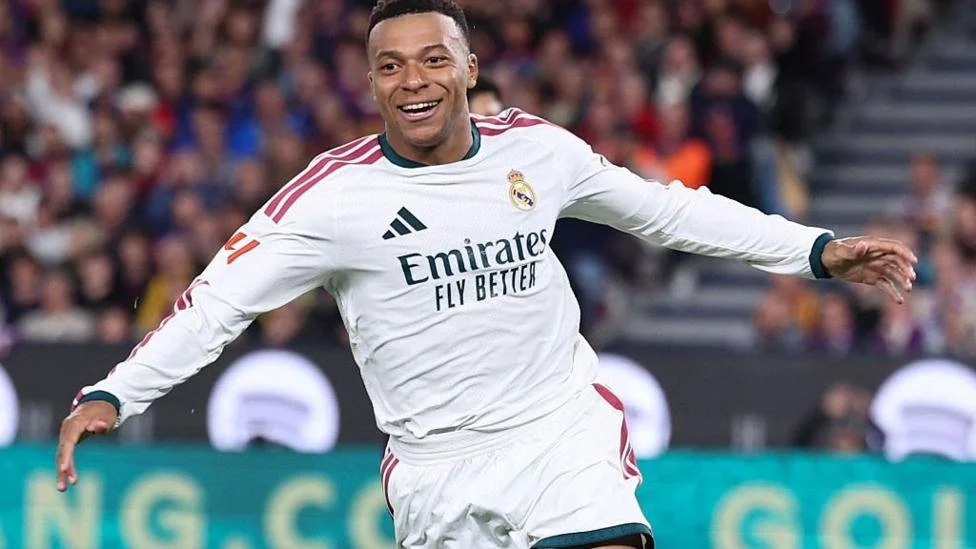
Real Madrid star Kylian Mbappé is facing a severe commercial backlash in China after comments he made about an online meme depicting late Chinese leader Mao Zedong triggered widespread anger across the country. Several prominent Chinese companies have already cut ties with the French footballer following the controversy.
The controversy stems from an appearance by Mbappé on The Bridge, a talk show hosted by his Real Madrid teammate Aurélien Tchouaméni. During the interview, Mbappé discussed internet memes related to his long-standing football nickname, “the dictator,” which originated due to his significant influence within the sport. Describing one image, Mbappé said “that makes me laugh the most, it’s the one where there’s a video of a guy, I think it’s a Chinese dictator…they put my….”, after which the broadcast edited in a meme of his face superimposed onto Mao Zedong.
Unverified footage of the interview circulated online, though the video is no longer available on the show’s official YouTube channel. According to BBC Sport, requests for comment have been sent to both Mbappé and Real Madrid regarding the incident.
Corporate Endorsements Cancelled Amid Public Anger
Public outcry gathered momentum after the Chinese football platform Dongqiudi highlighted the footage, stating that the remarks were “inappropriate” and “hurt the feelings of Chinese people.” The platform added that it was “unable to translate” the full statement because the content was “offensive to China and the Chinese people.” Screen captures of the conversation quickly went viral across Chinese social media networks, where users called for boycotts of both the French forward and Real Madrid.
In response to the growing anger, several major commercial sponsors swiftly terminated their endorsement contracts with Mbappé. Mengniu, China’s largest dairy manufacturer, announced that it “firmly opposes and has a zero-tolerance policy towards any words or actions that hurt the feelings of the Chinese people.” Beverage manufacturer Dongpeng released a matching statement, emphasizing: “Our company firmly opposes and has a zero-tolerance policy towards any behaviour that offends national sentiments.”
The fallout has also reached state media. According to reports in local media and state publication The Global Times, state broadcaster CCTV removed Mbappé-related content from its news applications and plans to halt broadcasts of La Liga matches. China’s Foreign Ministry addressed the issue through spokesperson Lin Jian, who stated: “We have noted the relevant reports. Words and deeds that hurt the feelings of the Chinese people will naturally be met with opposition from all sectors of Chinese society.” By Tuesday afternoon, Mbappé dominated five of the top ten trending topics on Weibo, with a leading comment advising, “Don’t ever come to China.”
Sensitivity Around Mao and Mbappé’s Past Comments
In China, references to Mao Zedong remain highly sensitive. Mao, who established the People’s Republic of China in 1949, led the country through devastating periods including the Great Leap Forward—which resulted in tens of millions of deaths due to famine—and the Cultural Revolution. Despite this history, the ruling Communist Party continues to promote Mao as an unassailable national symbol, making lighthearted references or memes involving his image deeply controversial.
Mbappé has previously addressed the “dictator” label that fans and media have applied to him over the years. In 2024, he pursued legal action against a French influencer who used his name on a kebab menu item. His international teammate Ousmane Dembélé also joked about the persona during the 2026 World Cup by calling him “Mobutu,” referring to the former dictator of Zaire, Mobutu Sese Seko.
Speaking to France Football in September, Mbappé discussed the lighthearted origin of such memes while acknowledging their darker implications, stating that they “sometimes reveal a lack of political and human awareness among people.” He added, “There’s a side that’s a bit less funny, because we know the damage people like that have caused throughout history,” noting that “Being compared to people who murder others, or who have made millions upon millions of people miserable… I don’t think I’ve done that in my life.”
Source: BBC Sport