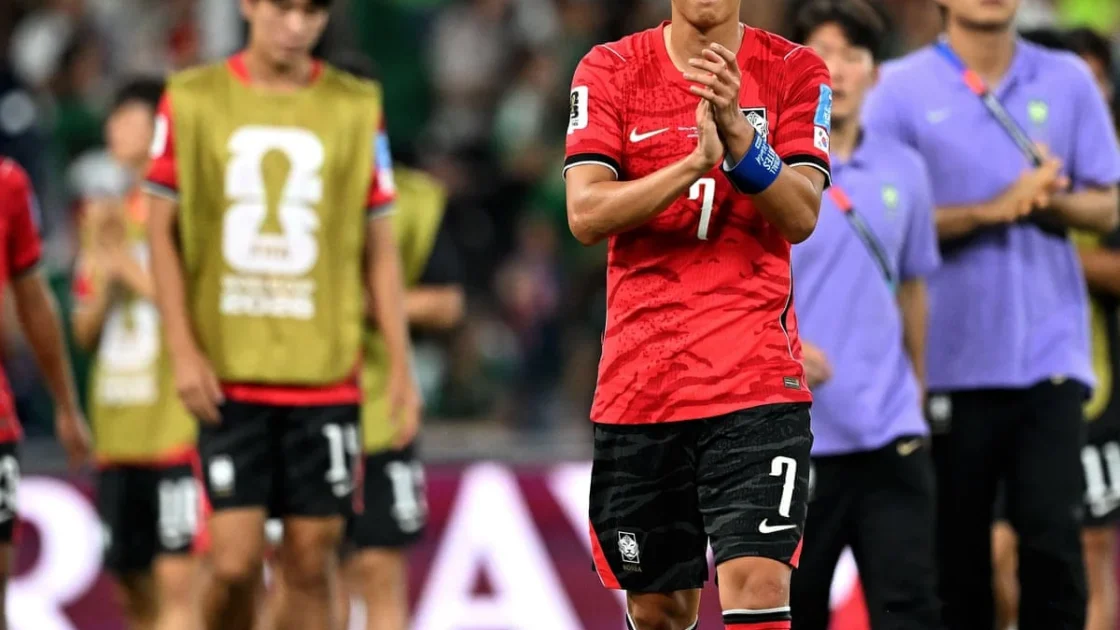
South Korea’s national football team is facing a turbulent period marked by internal divisions, administrative chaos, and growing questions over the future of captain Son Heung-min. Following a disappointing World Cup campaign, the squad has struggled with friction between younger and older players as the national federation deals with leadership departures and police investigations.
Political Scrutiny and Leadership Turmoil
The extent of the squad’s internal divide became public on October 21 during a parliamentary committee meeting, as reported by Football | The Guardian. Politician Jeong Yeon-wook questioned acting Korea Football Association (KFA) president Lee Yong-soo regarding reports that players were referring to Son not by his name, but derisively as “No 7” or “that person.” Lee acknowledged the reference to Son when asked, while declining to comment further on Jeong’s assertion that the team’s leadership has broken down and caused severe discord.
This scrutiny follows a difficult summer that included a group-stage exit at the World Cup, where unnamed reporters mocked Son for his lack of military service, leading to a media boycott. Son started the final game on the bench—a defeat to South Africa—capping a tumultuous tournament. In the aftermath, head coach Hong Myung-bo and KFA president Chung Mong-gyu stepped down, faced parliamentary questioning, and subsequently saw KFA offices raided by police.
Generational Divide and Senior Discontent
Cultural hierarchy has long influenced the South Korean squad, but current tensions run deeper than traditional seniority norms. While past coaches like Guus Hiddink addressed team dynamics by altering seating arrangements, the current squad is experiencing a significant rift involving players born in 1996.
According to multiple reports, senior players including Bayern Munich’s Kim Min-jae, FC Porto’s Hwang In-beom, and Schalke 04’s Hwang Hee-chan are dissatisfied with the team’s leadership and sought a fresh start with a new coach and captain following the World Cup. Following a 0-0 draw with Venezuela on October 2, Hwang In-beom told Football | The Guardian that he was physically and mentally tired after nine years with the national team, noting that necessary changes in football and other areas have not occurred. Meanwhile, Kim Min-jae criticized a lack of collective effort among teammates during matches.
Reports also indicated that Kim, Hwang In-beom, and Hwang Hee-chan were prepared to quit the national team before a KFA official persuaded them to stay, a claim the association did not deny. The KFA currently operates without a permanent president, and interim manager Robert Moreno was appointed in September on a short-term deal lasting until the end of November.
Son Heung-min’s Uncertain Future
With the Asian Cup approaching in a matter of weeks, fans have grown frustrated by the ambiguity surrounding the squad’s internal problems. Although Son remains popular in South Korea, his relationship with the domestic media differs from that of his teammates, with some supporters suspecting journalists are retaliating for the World Cup media boycott.
At 34, Son’s status as an elite-level forward has shifted, though he recently scored his 59th international goal—a record for South Korea—via a free-kick against Uzbekistan on October 6. Discussions surrounding his optimal position on the pitch have expanded to debate whether he should retain a starting place.
The upcoming Asian Cup, which the Taeguk Warriors have not won since 1960, offers a potential opportunity to mend the squad’s fractured legacy. The tournament may face delays until 2028 due to security concerns involving Houthi attacks in Saudi Arabia, providing either additional time for the divided team to unite or an extended period for the situation to deteriorate further.
Source: Football | The Guardian