Manchester United has increasingly resembled a high-volume content farm rather than a traditional football club, with Michael Carrick continuing his role as interim manager ahead of Saturday’s match against Chelsea. The ongoing soap opera at Old Trafford has provided ample material for Amazon’s All or Nothing camera crews, who have secured unprecedented behind-the-scenes access this season.
The Rise of Ex-Player Media Platforms
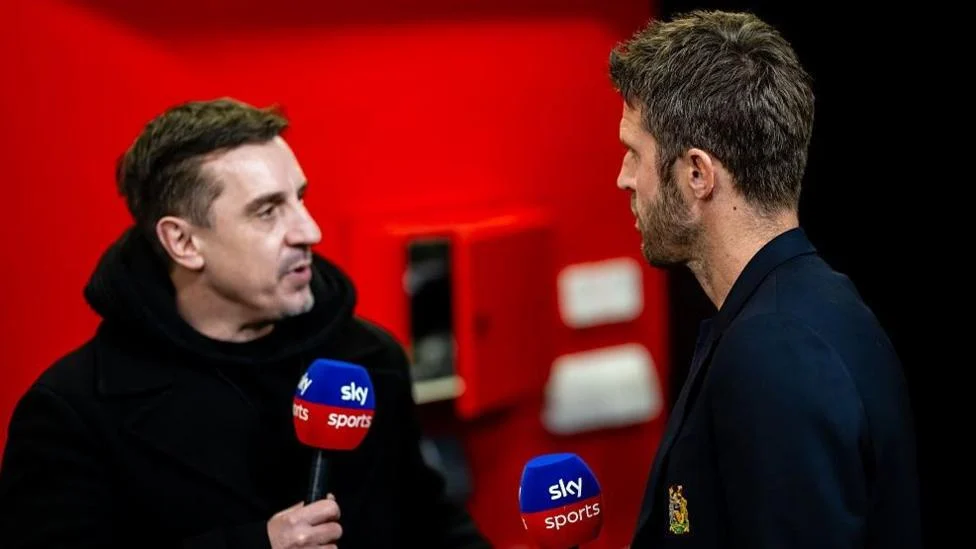
While wall-to-wall reporting on Manchester United is nothing new, the unrelenting coverage driven by former players has transformed into a growing industry. It is now harder to name United legends who lack a media platform than those who scrutinize the club’s every move. As reported by BBC Sport, Sky Sports pundit Gary Neville delivered scathing on-air commentary following United’s 3-0 defeat by Bournemouth last Sunday, before hosting a post-match podcast in the Old Trafford gantry.
During the podcast, Neville accused certain players of unprofessionalism, stating, “There’s a couple of them… I live in Manchester and they’re not that professional, some of them.” He added, “I’ve got no time for them. There’s a few of them that don’t go to bed at the right time. Don’t eat the right things. Don’t think about Manchester United every single minute of every single day.”
Digital and streaming channels have redefined modern football analysis. Neville launched The Overlap in 2021, and the channel has grown into one of sports media’s most influential outlets. Recently, Wayne Rooney appeared on Neville’s YouTube channel ‘Stick to United’ to declare that Carrick’s players “need a firework up their a***.” Neville also acquired a network of channels from internet personality Mark Goldbridge last summer, increasing the club’s digital footprint. Goldbridge, whose real name is Brent di Cesare, now co-hosts ‘Stick to United’ alongside Rooney.
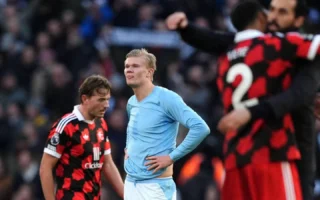
Other former players have joined the commentary circuit. Class of ’92 alumni Paul Scholes and Nicky Butt co-host ‘The Good, The Bad & The Football’. Prior to a Manchester derby last season, Butt claimed City striker Erling Haaland would pick up defender Lisandro Martinez and run with him, while Scholes suggested the forward would throw Martinez into the net. United ultimately won the match 2-0.
Addressing the constant stream of commentary from former teammates, Carrick told a press conference that he avoids external noise as much as possible, stating, “I don’t see it really. I see the things that I need to see. I don’t look for it – it doesn’t really help in any way. I’ve said it before, I care about what the supporters think.”
Balancing Criticism and Commercial Success
Former manager Erik ten Hag previously noted the difficulties his squad faced dealing with opinions from pundits like Neville and Rio Ferdinand, suggesting former players could offer more constructive help. Neville acknowledged the complexities of balancing club loyalty with punditry, admitting on Ferdinand’s podcast last summer that United matches are the hardest games he covers and noting that the balance of his criticism may not always have been right over the past decade.
However, Butt defended the commentary from former players, emphasizing their deep-rooted loyalty to the institution. “When it goes bad, you can’t cry and go, ‘Oh, they’re having a go at us’,” Butt explained in January. “We love the football club. I’ve been a Manchester United fan since the age of six or seven… I’m saying it because it is genuinely c**p.”
Despite negative coverage, the club continues to attract massive global engagement and maintains high commercial revenue, remaining among the highest-grossing football teams in the world despite not winning the Premier League since 2013. Former executive vice-chairman Ed Woodward previously remarked that playing performance did not have a meaningful impact on the commercial side of the business.
The club itself has long embraced its status as a constant center of attention through its famous “hated, adored, never ignored” mantra, which has featured on banners at Old Trafford and official merchandise. Ultimately, both Manchester United and its critics have capitalized on the global fascination surrounding the team.
Source: BBC Sport