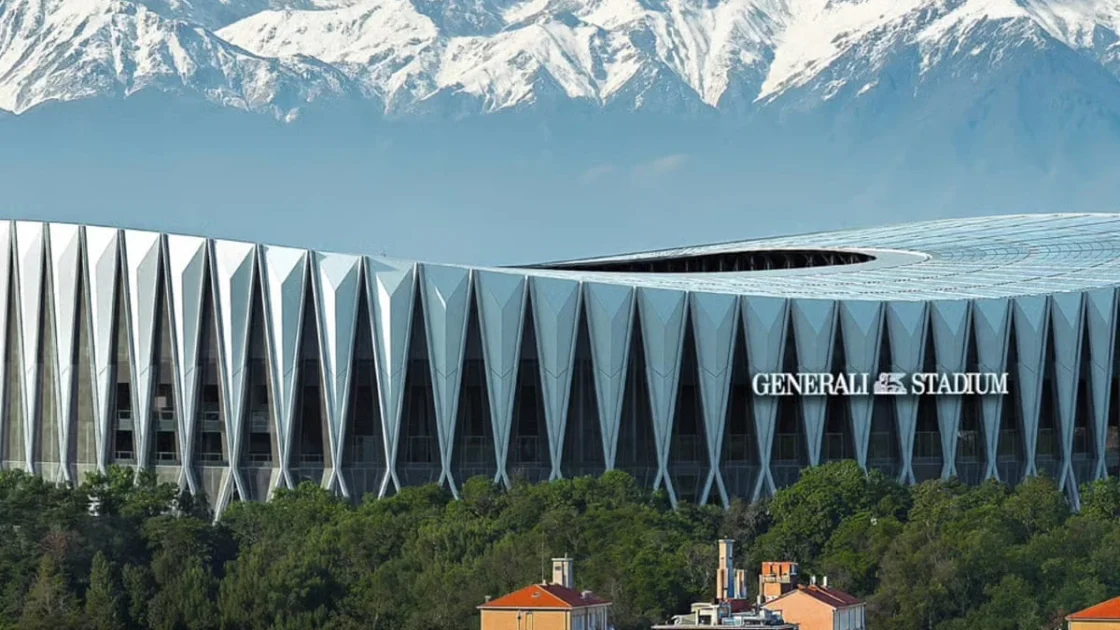
Internazionale and Milan have unveiled plans for their new Generali Stadium, which is set to replace the shared San Siro venue beginning in the 2031-32 season. The project, sponsored by Italy’s largest insurance company Generali, will feature a 71,500-seat capacity and carry an estimated cost of €1.2 billion (£1 billion).
Stadium Design and Fan Reaction
The design plans were presented during a gala event held at Milan’s Castello Sforzesco on Thursday, though some supporters used the occasion to protest the demolition of the historic ground. Just before the presentation started, a group of Inter fans entered the castle courtyard to display a banner declaring that the lights at San Siro will never be extinguished while chanting demands to leave the current stadium alone.
Construction on the new venue is scheduled to commence in 2028 upon the site currently occupied by the 75,000-capacity San Siro. Architect Norman Foster described the planned arena as having a low body that rises at each end behind the goals. Stadium specialist David Manica, who partnered with Foster on the initiative, explained that the steep configuration is intended to place spectators as close to the playing surface as feasible.
The arena is designed to accommodate international NFL fixtures, rugby fixtures, and musical concerts. Both clubs invested €197 million (£165m) to purchase the existing San Siro facility and its surrounding parking zones, with the current ground slated for substantial demolition as building work approaches completion.
History of San Siro
Originally opened in 1926 and also recognized as the Giuseppe Meazza Stadium, San Siro stands as Italy’s largest sports arena. While regarded as one of European football’s most legendary locations, the venue demands extensive modernization despite previous renovations throughout its history.
The upcoming Generali Stadium is a candidate to host matches for Euro 2032, a tournament co-hosted by Italy and Turkey. Architects Foster and Manica previously collaborated on the construction of the new Wembley Stadium, and Foster’s firm, Foster + Partners, also created designs for a proposed 100,000-seat venue for Manchester United.
Source: Football | The Guardian