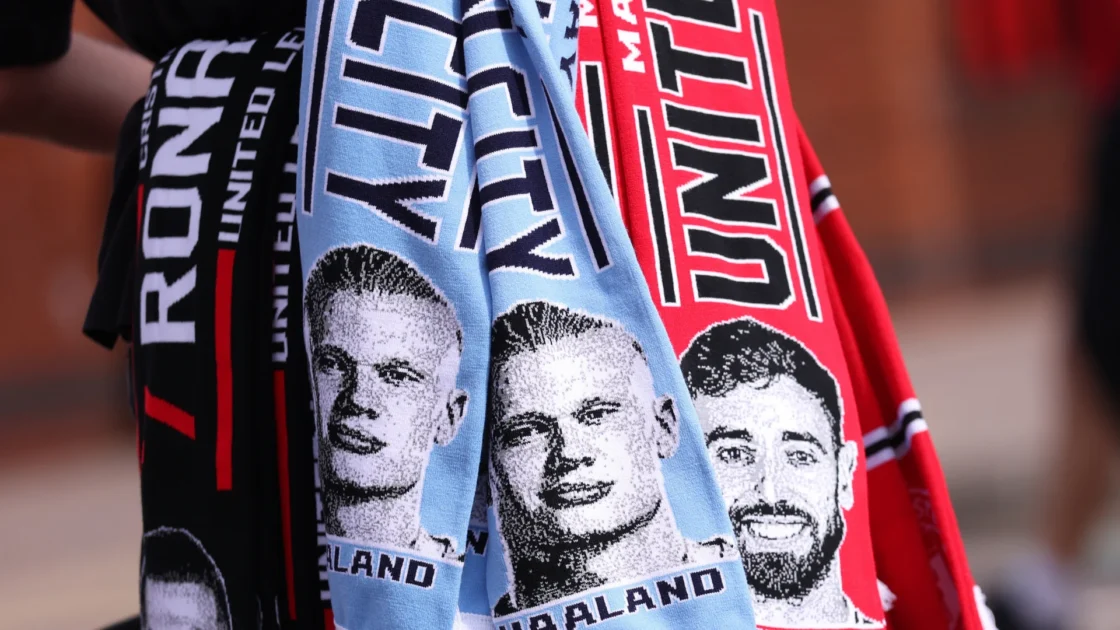
As Arsenal and Liverpool prepare to face off at Anfield, questions surround the existence of a supposed “Red Cartel” dominating English football. Manchester City, facing potential sanctions for rule breaches, have claimed they are victims of a conspiracy by traditional powerhouses, a narrative echoing across the sport amid debates over financial regulations.
The Reality of Dominance and Financial Rules
City supporters and executives like Ferran Soriano have characterized financial penalties as a conspiracy by traditional clubs to keep newcomers away from the top table. Former Chelsea midfielder Joe Cole recently argued that financial rules lock out ambitious clubs unlike in the era of Roman Abramovich. However, critics point out that City’s historic success under Pep Guardiola was achieved while systematically breaking Premier League rules for nearly a decade, casting doubt on claims of a level playing field.
Historical data shows that Arsenal, Liverpool, and Manchester United rarely dominated concurrently as a tight triopoly. The period between 1996 and 2009 stands as an exception, with all three occupying the top four in 10 out of 11 seasons. For the first time since 2009-10, all three clubs are playing in the Champions League again in 2026-27, after years marked by fluctuating fortunes and mixed league finishes.
Shifting Financial Landscapes and Global Appeal
Financial disparities have narrowed over the decades. In 2008, Manchester United’s revenues dwarfed those of seventh-placed Manchester City by more than three times. By the 2024-25 season, while Liverpool led English earnings at €836.1 million, the seventh-richest English side, Aston Villa, earned €450.2 million, narrowing the proportional gap significantly. Football finance expert Kieran Maguire noted that the Premier League functions effectively as a Super League, with clubs like Bournemouth, Aston Villa, Newcastle, and Brighton breaking into the top six in recent seasons.
Despite increased competitiveness, the traditional trio commands unmatched global engagement, viewing figures, and brand value. Arsenal, Liverpool, and Manchester United built their massive international fanbases during successful eras in the 1970s, 1980s, and the dawn of the Premier League. Kevin Demoff of Kroenke Sports & Entertainment stated that Arsenal aims to be the biggest global brand in the world, highlighting the enduring pull of these historic institutions.
Power Struggles and Future Governance
While a coordinated cartel may not strictly exist, the historical heavyweights have repeatedly attempted to shape the landscape to their advantage. In October 2020, the owners of Liverpool and Manchester United proposed Project Big Picture, offering financial aid to lower leagues in exchange for special voting rights and a reduced calendar. Months later, three of the five founders of the aborted European Super League were the American owners of Manchester United, Liverpool, and Arsenal.
Maguire described these actions not as a cartel stopping participation, but as an interest group with common goals trying to hijack football for their own ends. Proposals for stricter financial controls, such as spending caps and anchoring systems, have routinely been voted down by clubs. Ultimately, television revenue remains equitably distributed, and any major rule change requires a majority vote from the other 17 clubs, demonstrating that Manchester City and others hold the voting power to keep the traditional giants in check.
Source: CBS Sports Headlines