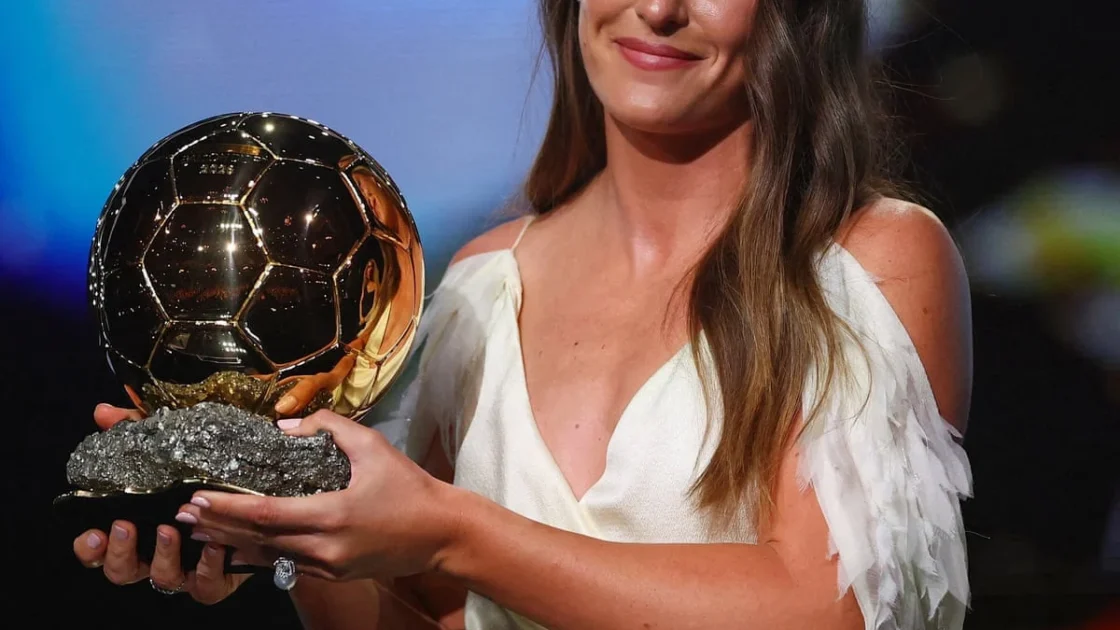
Alexia Putellas claimed the Ballon d’Or for a record-equalling third time at the London Palladium on Monday night, cementing her status as one of the greatest players in the history of women’s football. The 32-year-old midfielder’s victory continued Spain’s strong domination of the award, following a remarkable recovery from a severe anterior cruciate ligament injury suffered in 2022.
Catalan Dominance and Ceremony Glitches
Putellas spearheaded Barcelona’s success last season with a competition-leading 14 goal contributions, consisting of eight goals and six assists across 11 Women’s Champions League matches, alongside her starring role in Spain’s Nations League finals victory last December. In her acceptance speech, Putellas dedicated the honor to her former club, stating, “This prize is for Barcelona.”
Barcelona swept the major categories on the night as Cata Coll claimed the goalkeeper prize, Pere Romeu won the coach award, and Vicky López received the young player honor. Additionally, Ewa Pajor finished second behind Putellas, and Clara Serrajordi placed second in the young player voting. However, the celebrations saw a bizarre moment when club president Joan Laporta claimed the men’s team could win the Champions League this season while accepting the award for the women’s club of the year.
While the event avoided the sexist controversies that plagued its early years after France Football introduced the women’s award in 2018, full equality was still missing. Shortlists lacked parity in length, with only five players nominated for the women’s young talent and goalkeeper awards compared to ten for the men. Furthermore, the live show featured few women presenting awards, with Lucy Bronze handing López her trophy, while Michael Owen presented the main prize to Putellas.
Global Shortlist Limitations and African Representation
Fans noted that the voting period ran from 3 August 2025 to 19 July 2026 to align with the men’s World Cup, excluding this year’s rearranged Wafcon held from 26 July to 16 August. Those tournament performances will instead count toward next year’s prizes. Consequently, Cameroon’s Wafcon-winning head coach, Valentine Nguele, missed out on a coach of the year nomination.
African representation remained minimal, with Temwa Chawinga becoming the sole African player in the women’s top 10. While Putellas was a worthy winner, critics argued the structure makes it difficult for players from nations less favored in major international tournaments to win, as next year’s Women’s World Cup will likely direct focus toward Brazil.
Poland’s Pajor finished second after a stellar campaign with Barcelona but faces similar national limitations for future wins. Jamaica’s Khadija Shaw finished third after guiding Manchester City to their first domestic title in a decade, while Haiti’s Melchie Dumornay took fourth place.
If Putellas maintains her current form, she remains a strong contender to retain the crown next year as Spain prepares to defend its world title.
Source: Football | The Guardian