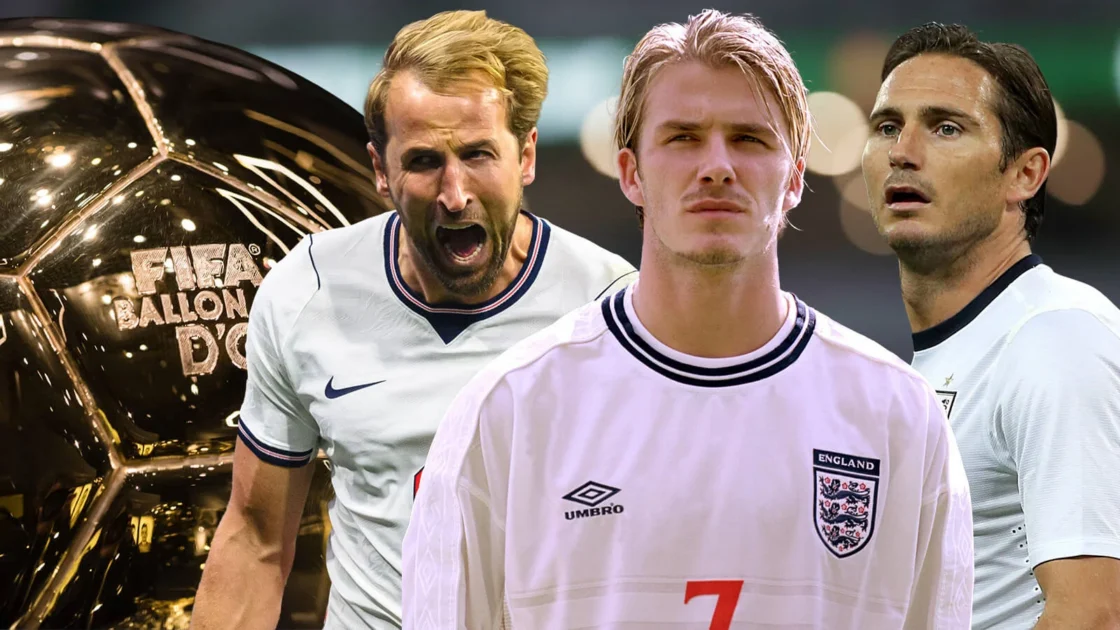
Harry Kane’s historic Ballon d’Or victory has ended a 25-year wait for an English winner of the prestigious award. His triumph places him straight into the ultimate England Ballon d’Or XI, a dream lineup compiled of the Three Lions stars who achieved the highest finishes in the voting history.
Goalkeeper and Defences
Peter Shilton takes the goalkeeper spot after securing fifth place in the 1989 voting, standing as the highest-placed England international that year and the only top-five player not representing a club in Milan. Due to a severe lack of Ballon d’Or recognition for English full-backs, the tactical lineup deploys a three-man central defense. Iconic Wolves captain Billy Wright anchors the backline after finishing second in 1957 behind Real Madrid star Alfredo Di Stefano. Joining him on the podium that same year was Busby Babes crown jewel Duncan Edwards, who claimed third place following successive league titles with Manchester United before his tragic death in the Munich air disaster. Bobby Moore completes the central defense, having finished as runner-up to Gerd Muller in 1970.
Midfield Maestros
Inaugural 1956 Ballon d’Or winner Stanley Matthews takes his place on the right wing after beating legendary figures like Di Stefano, Puskas, and Yashin while playing in his 40s. With Matthews occupying the right flank, David Beckham shifts into central midfield. Beckham finished as runner-up in 1999 following Manchester United’s historic treble. Frank Lampard commands the other central midfield role, winning the historical debate against Steven Gerrard and Paul Scholes by finishing second behind Ronaldinho in 2005, while Gerrard finished third after inspiring Liverpool’s Champions League triumph in Istanbul. Bobby Charlton lines up on the left wing, having secured his pinnacle year in 1966 as England’s talisman for World Cup glory, alongside consecutive runner-up finishes in the following two years.
The Forward Line
Kevin Keegan spearheads the attack after claiming back-to-back Ballon d’Or titles in 1978 and 1979 while playing for Hamburg. Harry Kane joins him up front, pushing Gary Lineker—who finished second in 1986—to the substitutes’ bench. Michael Owen completes the formidable front three, having secured the award in 2001 by defeating elite competitors such as Zidane, Henry, Figo, and Raul.
Other notable English forwards who came close over the decades include Alan Shearer with a third-place finish in 1996, Wayne Rooney reaching fifth in 2011, and Jamie Vardy claiming eighth during Leicester City’s historic run in 2016.