Football clubs have traditionally rewarded supporter loyalty with priority match access, loyalty points for away games, and merchandise discounts. However, some clubs are now exploring ways to reward fans for something entirely different: choosing sustainable travel to stadiums.
Real Betis and Bradford City Lead the Way
In January 2026, Real Betis launched a partnership with the sustainable mobility platform Ciclogreen through its Forever Green initiative. Supporters can log journeys made on foot, by bicycle, via public transport, or on electric scooters to earn distance-based points. These points unlock rewards and prize draws for match tickets, signed jerseys, and player experiences.
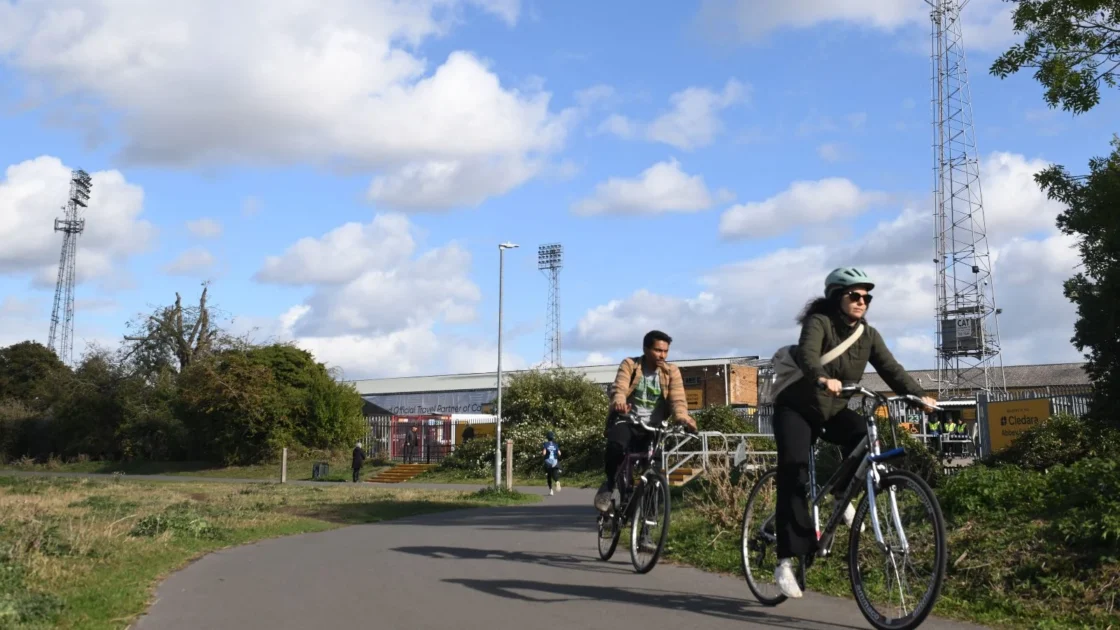
Similarly, Bradford City partnered with BetterPoints in 2026 to offer rewards such as shopping vouchers, local purchases, and charitable donations for walking, cycling, or using public transport. This scheme forms part of Bradford’s Greener Bantams programme, which includes a sustainable travel hub developed via its community foundation and supported by the West Yorkshire Combined Authority.
Overcoming Travel Obstacles
While incentive schemes encourage eco-friendly choices, infrastructure remains a major factor. Research commissioned by Trainline’s I came by train initiative in September 2025 estimated that UK football fans make 34 million return journeys longer than an hour each year, with over half driven by car. Although 83% of surveyed supporters expressed a willingness to consider train travel more often, common obstacles include expensive fares, inconvenient timetables, and early service finishes.
Brentford’s 2026 sustainability survey demonstrated a strong appetite for change among fans, with 74% of respondents interested in reducing the club’s environmental impact. Nearly half stated they would share car journeys, and 36% indicated a willingness to cycle to matches. Nevertheless, accessibility remains crucial, meaning schemes must avoid disadvantaging disabled fans, families with young children, or supporters from poorly connected regions.
Wider Strategies and UEFA Guidance
Reward schemes cannot replace the need for clubs to address broader transport infrastructure or make up for policies that increase travel emissions. In August 2026, UEFA introduced new guidance for measuring spectator travel emissions in collaboration with the Premier League and top professional leagues in France and Germany. This guidance highlighted incentives, improved cycling amenities, and public transport partnerships as effective methods to promote lower-carbon travel.
As clubs work to reduce their environmental footprint, incorporating reward schemes into a comprehensive strategy offers a practical way to harness supporters’ existing sense of community. Providing tangible benefits for greener journeys offers a sensible step forward in reducing matchday emissions.