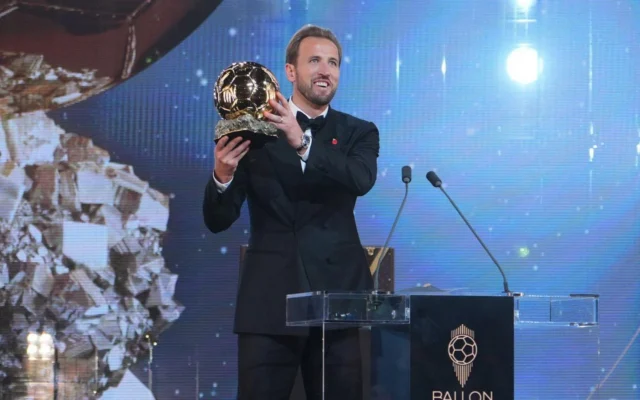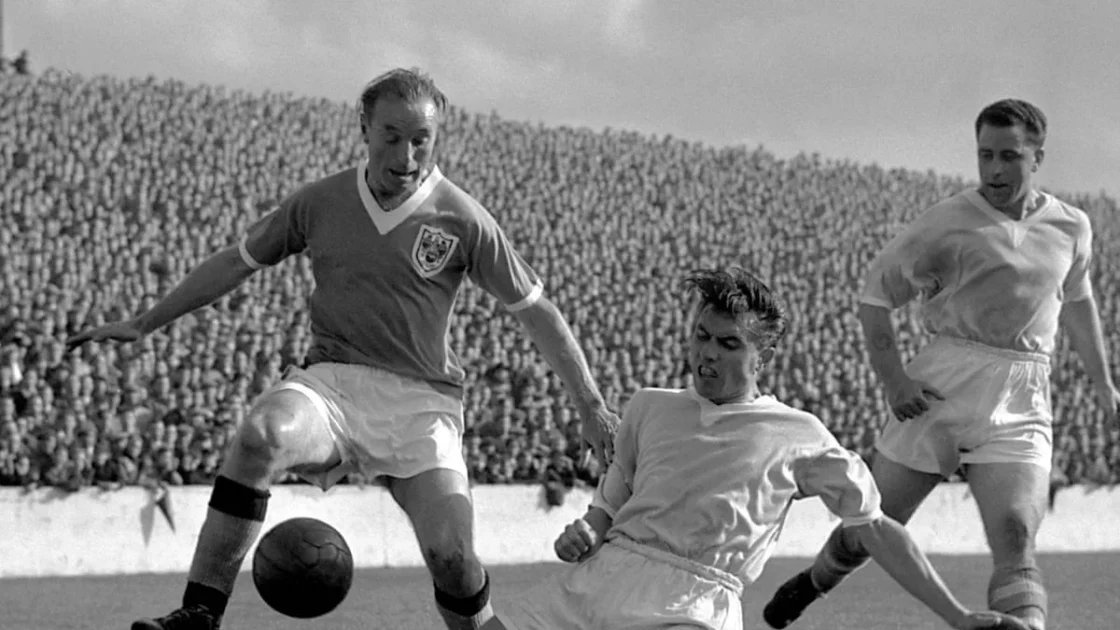
The world’s football elite will assemble at the London Palladium on Monday for the Ballon d’Or ceremony, marking a historic return to England 70 years after the inaugural award was presented to legendary winger Stanley Matthews.
A Shift From Paris to Honor Football Royalty
The decision to host the event in London rather than its customary venue in Paris serves as a tribute to Matthews, who became the first active footballer to receive a knighthood in 1965 before retiring at age 50. As reported by The Guardian, the grand surroundings of the London Palladium stand in stark contrast to the first presentation, which took place at Blackpool town hall.
During that initial event, 41-year-old Matthews was presented with the trophy by Gabriel Hanot, the editor of L’Équipe who created the award to recognize the global game’s top performer. The mayor of Blackpool also presented Matthews with a specially commissioned china plate. Matthews, who abstained from alcohol, gave a brief speech afterwards.
His son, Stanley Matthews Jr, who will attend Monday’s ceremony alongside his sister Jean and her two daughters, recalled the simple nature of the original gathering. “He might have had a double carrot juice that day,” Matthews Jr said. “There was no ceremony. ‘Here’s your Ballon d’Or, well done’, sort of thing. But obviously it’s grown over the years, and now it’s a huge event. We’re very excited.”
A Revolutionary Career Ahead of Its Time
Matthews began his senior career with his local club Stoke in 1932, earning the nickname “Wizard of Dribble” and becoming one of the most famous figures in world football. His father, Jack, a boxer known as the Fighting Barber of Hanley, instilled a strong work ethic in him. While owning a hotel in Blackpool that attracted prominent celebrities, Matthews maintained early-morning beach training routines to extend his playing career.
Matthews Jr described his father as a pioneer who altered his equipment and preparation to gain an advantage. “He was so far ahead of his time,” Matthews Jr explained. “The way he trained, his football boots … they were so light, they were like slippers so that he could move quicker. Towards the end of his career, when he was back at Stoke, he had the fire brigade come and water the pitch before the game so it would be a little slick, which was better for him. Now they water the pitches all the time, you know. So he was very revolutionary in all the things he did, plus his diet and his training.”
Remaining the oldest recipient of the Ballon d’Or, Matthews played his final game for England in 1957 at age 42, finishing with 54 international caps—a total limited by the Second World War. Matthews Jr suggested his father would have flourished in modern tactics, remarking, “He would probably have thought: ‘My goodness, if all I had to do was pass the ball around, I could have played until I was 70,’ because a lot of the players just seem to be doing that, passing out from the back.”
Financial Struggles and African Coaching Ventures
Unlike today’s premier players who command massive salaries, Matthews was subject to England’s maximum wage cap of £20 per week until its abolition in 1961. Joe Pierce, producer of the 2017 documentary Matthews, contrasted his compensation with top American athletes of the era, noting that baseball star Joe DiMaggio “was at the height of his career, and he had just signed a contract for $100,000 a year.”
To supplement his earnings, Matthews pursued commercial opportunities, including a boot brand, books, and an attempt to sell canned vegetable juice. “He tried to do it in cans, but it didn’t work out,” Pierce stated. “There was a problem because it went bad in the cans.”
He also spent off-seasons coaching overseas, visiting African nations every summer between 1953 and 1978. Shortly after receiving his Ballon d’Or, Matthews traveled to Ghana for exhibition games celebrating the country’s independence, where he was presented with an ivory sword and crowned a local chief. “The King of Ghana – that’s what they called him,” Matthews Jr said. “My sister still has the stool that he was crowned on.”
Defying Political Pressure in South Africa
During the mid-1970s, Matthews established a team in Soweto, South Africa, known as “Stan’s Men.” He secured sponsorship from Coca-Cola for the squad and arranged a trip for them to compete in Brazil, despite intense opposition from the apartheid administration.
Pierce noted that both the UK and South African governments were involved in the dispute, along with intelligence operatives. Despite the political friction, Matthews persisted, utilizing high-level connections such as his friendship with the Duke of Edinburgh.
His son recalled that Matthews took pride in being banned by authorities. “He was very proud of the fact that at one stage he was banned. He said: ‘Frank Sinatra was banned as well.’ So he thought that was kind of funny. I remember him saying that the South African players had so much speed and so much talent. Dad just liked people. And he knew that they had or he thought that they had a good talent. He just wanted to see if he could help them improve.”
Matthews’ direct involvement with Stan’s Men concluded following the 1976 Soweto Uprising. One former player in Pierce’s documentary described the end of their contact as leaving a “hole in my heart.” When Matthews died in 2000 at the age of 85, over 100,000 people gathered in Stoke for his funeral.
Reflecting on the record 78 African players who featured in the Premier League last season, Pierce remarked that Matthews “is probably sitting there saying: ‘I told you so.’” Since Matthews won the inaugural award, only three Englishmen—Bobby Charlton, Kevin Keegan, and Michael Owen—and one African player, George Weah, have claimed the Ballon d’Or trophy.
Source: Football | The Guardian