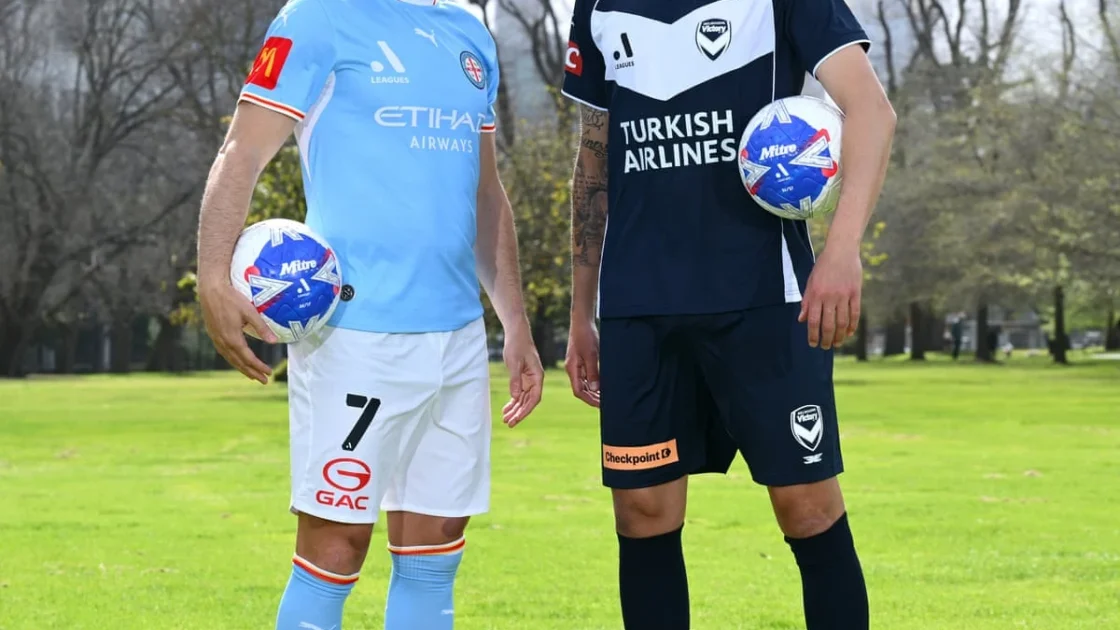
The A-Leagues marquee fixture between Melbourne Victory and Melbourne City arrives on Saturday night with distinct links to Manchester, even as local clubs focus on domestic ambitions and league development. The cross-town clash serves as a vital showcase for the competition, overshadowing recent English football headlines and ownership connections.
A Showcase for Australian Football
Melbourne Victory chief executive Caroline Carnegie describes the derby as a crucial “shop window” and footballing “showpiece” for the A-League Men, stating she aims for a sellout crowd. Attendances for the fixture reached over 50,000 during a 2015 semi-final, though crowds have worked to rebuild following the pandemic. Carnegie notes the match provides an ideal opportunity to attract new attendees and convert them into regular supporters.
Melbourne Victory enters the fixture under pressure following a shock Australia Cup final loss to South Melbourne and an opening round league defeat in Wellington under new coach Giovanni Savarese. Meanwhile, Melbourne City welcomes back veteran attacker Mat Leckie alongside fellow Socceroos Aziz Behich and Awer Mabil. Leckie highlights the club’s reliance on emerging young talent, noting that players like Medin Memeti, Quinn MacNicol, and Kavian Rahmani represent some of the country’s best prospects.
Investment and the Talent Factory Model
Melbourne City’s strategy centers on blending proven internationals with youth development, mirroring a broader shift across the A-Leagues toward player transfers. Annual transfer revenue for Australian clubs more than tripled in the 2023-24 period, helping offset declining broadcast income. This developmental focus aligns with the City Football Group network, which has facilitated moves for players like Patrick Beach, Kai Trewin, and A-League Women star Leticia McKenna to international clubs.
Steve Rosich, chief executive of A-Leagues operator APL, praises Melbourne City as a significant club that operates a market-leading academy producing dozens of A-League players alongside strong investments in infrastructure and women’s programs. CFG connections also extend into league administration through APL board member Simon Pearce, and minority owner Silver Lake previously invested $140m in the A-Leagues in 2021.
Looking Ahead to Expansion and Strategy
While the Manchester City financial rules breach has captured attention in England, Leckie reports the matter has not been a major focus in the Melbourne City dressing room, telling The Guardian that the players simply focus on playing. Rosich similarly maintains attention on domestic matters, including recent agreements with referees and impending player pay deals that have helped clear administrative backlogs.
Opening round broadcast reach and average attendances have shown positive momentum, prompting discussions about future growth. Melbourne City coach Aurelio Vidmar recently called for a four-club expansion to lengthen the season, while Rosich has secured board sign-off on a near-term strategy focusing on young fans and the A-League Women.
Carnegie emphasizes that involvement from prominent global investors—such as Victory minority owners Juan Mata and Tony Bloom, along with backers of other clubs—demonstrates solid underlying foundations for the competition as officials look to build long-term momentum.
Source: Football | The Guardian